
Board Review Series-Pathology
Skyscape Medpresso IncMedical
0.00.00 Reviews
- Version
- 4.16.0
- Installs
- 10.00K
- Age Rating
- Everyone
Screenshots
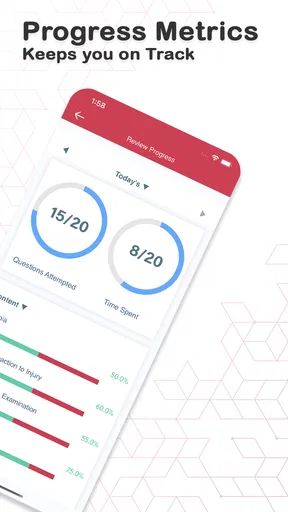

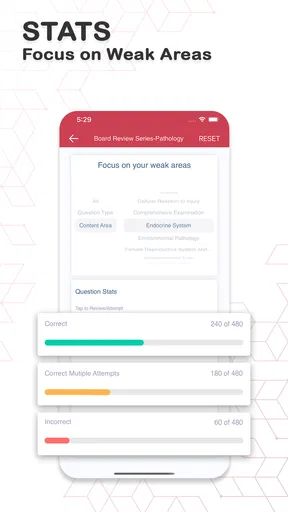
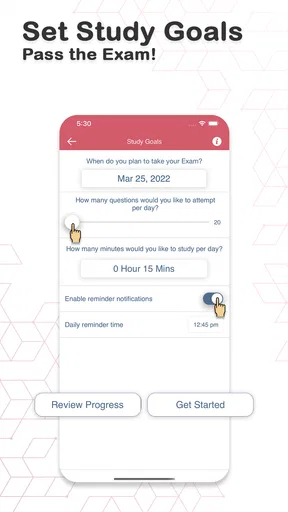
Our Review of Board Review Series-Pathology
 Analysis by Appyee
Studying pathology from a phone can be useful, but only when the app helps me make decisions rather than simply scroll through another digital textbook. Board Review Series-Pathology is built around that idea: it gives me a question-led way to revisit pathology concepts, check an answer, and read the reasoning immediately afterward. I see it as a focused companion for medical students preparing for board-style exams, not as a complete replacement for lectures, a reference book, or supervised clinical teaching.
The app comes from Skyscape Medpresso Inc and sits in the medical category. It is free to install, with optional in-app purchases listed between $29.99 and $44.99 per item. The basic access model is worth understanding before committing time to it, because the useful study experience depends on what content is available to you without an upgrade. It is rated for Everyone, runs on Android versions from 5.0 onward, and the current version is 4.16.0.
How I use it for a repeatable pathology study routine
My most reliable workflow starts with a narrow goal. Instead of opening the app and answering questions at random, I choose one pathology area I have recently studied or one topic that repeatedly causes mistakes. I then work through a short sitting, treating each question as a test of reasoning rather than a memory quiz. That distinction matters because pathology questions often combine morphology, mechanism, clinical presentation, and laboratory findings.
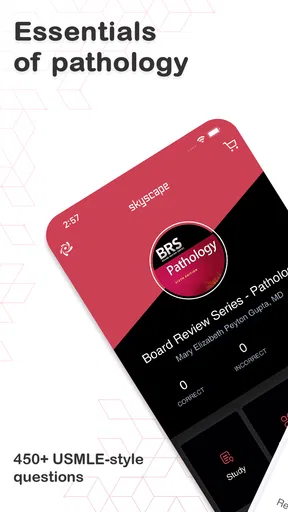
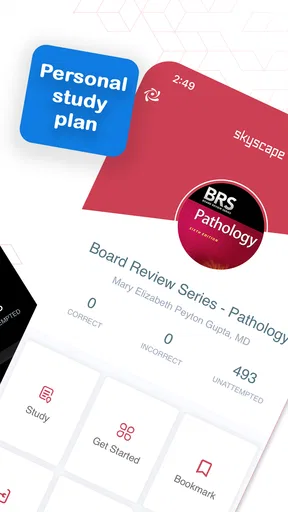
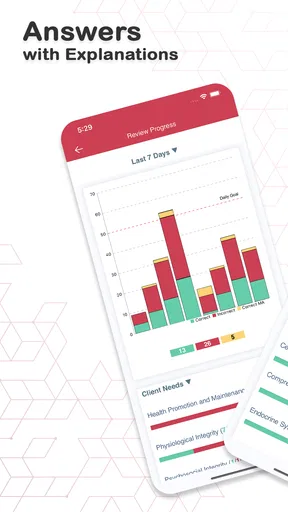
The app’s central offering is a collection of over 450 USMLE-style questions, with answers and rationales placed at the end of the chapters. That structure encourages a two-stage approach. First, I commit to an answer without immediately looking for reassurance. Then I review the explanation and ask why the other choices are weaker. If I only check whether my letter matches the answer, I lose much of the educational value.
I find it helpful to keep a small error log outside the app. For each missed question, I write the underlying distinction in plain language, such as “increased pressure causes this pattern” or “the biopsy finding points to a different disease process.” This prevents the common mistake of remembering a single answer while forgetting the principle behind it. The app supplies the question-and-rationale cycle; the error log turns that cycle into a longer-term study system.
A realistic everyday use case is a short review session between classes or during a commute when I can concentrate. I might answer several questions on a topic covered earlier that day, then revisit only the rationales connected to mistakes. That is more practical than trying to read a full pathology chapter from beginning to end on a small screen. It also makes the app suitable for maintenance study when I have limited time but still want active recall.
The strongest habit is to delay the explanation until after a genuine answer. If I read the rationale first, the app becomes passive review. If I answer first, even incorrectly, the explanation has a clear target and is easier to remember.
What the question format does well
Board-style questions are valuable because they force me to connect facts. A pathology review tool that only presents definitions can make me feel prepared while leaving gaps in application. Here, the question format gives me a reason to distinguish similar diseases, interpret a presentation, or identify the mechanism most consistent with the case. The rationale is especially important when I choose the right answer for the wrong reason.
I also like using the questions diagnostically. A low score in one sitting is not automatically a sign that the app is poor or that I am unprepared overall. It may reveal that I know isolated facts but cannot identify which fact matters in a clinical vignette. That insight changes how I study afterward: I return to the relevant textbook section or lecture notes, then use the app again to see whether the reasoning has improved.
The chapter-based organization is better suited to deliberate revision than to completely unstructured browsing. I can focus on a system, finish a meaningful group of questions, and then move to another topic. For students following a pathology course, this makes it easier to align practice with the week’s material. For dedicated board preparation, I would use it as one layer in a broader plan rather than as the only question bank.
Settings and small choices that affect the experience
Before settling into regular use, I would check the app’s available reading and navigation options on the device. Medical study apps can feel very different depending on text size, screen orientation, scrolling behavior, and whether the interface makes it easy to move between a question and its explanation. I would not assume that the default arrangement is ideal for long sessions, especially on a smaller phone.
I also recommend checking which chapters and question material are accessible before building a schedule around them. Since the app is free to install but includes paid items, the practical question is not simply whether it costs nothing to download. The important question is whether the specific content needed for your current study plan is included or requires a purchase. Checking that early avoids reaching a difficult topic and discovering that the relevant material is behind an optional item.
Reading rationales at the end of chapters changes how I plan sessions. I do not treat each question as a self-contained flashcard. I reserve enough time to review the explanations, because that is where the app can clarify why a tempting alternative is wrong. If I am rushing, I would rather answer fewer questions carefully than move quickly through a larger set without processing the reasoning.
Another useful choice is deciding when not to use the phone. If I am tired, distracted, or trying to memorize a large table of details, a printed page or a larger reference may be more efficient. The app is strongest when I need retrieval practice and explanation. It is less comfortable for extended reading, annotation, or comparing several complex figures at once.
Faster patterns for busy study days
Experienced users can make the review more efficient by separating recognition from correction. On the first pass, I answer without overthinking every possibility. On the second pass, I focus only on questions where my confidence was low, where I changed my answer, or where I was correct for an uncertain reason. This produces a more useful review than spending equal time on questions I already understand.
A second pattern is to use the rationales to create “contrast pairs.” When two diagnoses seem similar, I write down the feature that separates them rather than copying the entire explanation. For example, I might record the key difference in mechanism, age pattern, morphology, or laboratory association. This is a compact way to turn a long explanation into a decision rule that can be recalled during another question.
I would also avoid repeating the same questions immediately after reading the answer. Immediate repetition can create familiarity without true recall. A better routine is to finish a chapter, review the mistakes, study the weak concept elsewhere if necessary, and return later. The exact interval can vary with the exam schedule, but the principle is consistent: leave enough time for the answer to stop feeling obvious.
For a weekly routine, I would combine targeted sessions with mixed review. Targeted practice helps repair a known weakness, while mixed questions test whether I can identify the relevant pathology without being told the topic in advance. The app is particularly useful in the first mode because its chapter structure gives me a clear starting point. I would supplement it with another source when I need broader randomization or more extensive performance tracking.
One non-obvious trade-off is that a rationale can be educational even when the question itself feels familiar. If I remember the wording, I may mistake recognition for mastery. To counter that, I explain the answer aloud in a new way and then ask myself what change in the vignette would make another option correct. That small exercise reveals whether I understand the principle or merely remember the page.
Where it fits beside textbooks and larger question banks
Compared with a traditional pathology textbook, this app is quicker to enter and easier to use for active recall. A textbook remains better when I need a comprehensive explanation, detailed illustrations, or a connected narrative from basic mechanisms through disease manifestations. I would open the book when a rationale exposes a gap that cannot be repaired by a short review.
Compared with broad commercial question banks, Board Review Series-Pathology may appeal to students who want a more focused pathology resource. A larger platform may offer more extensive analytics, wider subject coverage, timed blocks, or a bigger pool of varied cases. Those features can matter during a final board push. On the other hand, more content is not automatically better if I am still struggling with core pathology patterns and need a manageable way to practice them.
The app also differs from flashcard tools. Flashcards are excellent for repeated recall of compact facts, but they can encourage isolated memorization. These questions ask me to interpret information in context. I would use flashcards for terminology and high-yield associations, then use this app to test whether I can apply those facts when the presentation is less direct.
Limits that matter before making it your main resource
The first limitation is scope. A pathology question-and-rationale app cannot serve as my entire medical curriculum. It will not replace foundational teaching, a full reference, clinical guidance, or feedback from instructors. Even a correct answer should not be treated as permission to apply a medical decision outside the educational setting.
The second limitation is the purchase structure. Free installation lowers the barrier to trying the app, but optional paid content means I need to inspect the available material before assuming the whole review experience is included. The listed price range is substantial enough that I would compare the relevant item with the cost and coverage of other study resources before buying.
The third limitation is the danger of overconfidence. A familiar question style can make progress feel faster than it really is. If I repeatedly practice only one chapter or remember the wording of the cases, my performance may not transfer to a mixed exam block. I would therefore use the app to strengthen concepts, not as the sole measure of readiness.
There is also a practical limitation in studying on a phone. Small screens are convenient, but they are not ideal for every pathology image, table, or long explanation. If visual detail is central to the topic, I prefer a larger display or a dedicated reference. The app works best when the question and rationale are the main task, not when I am trying to build a complete visual atlas.
Who should use it and who should look elsewhere
I would recommend this app to a medical student who wants structured pathology practice, especially someone who learns well by answering questions and then examining the reasoning. It is also useful for a student who has finished an initial pass through the subject and needs a compact way to identify weak areas. The chapter organization makes it approachable when a full question bank feels too broad.
I would be more cautious recommending it to someone looking for a complete board-preparation platform. If you need extensive cross-subject coverage, sophisticated progress reports, large mixed blocks, or a major library of supplementary media, a broader service may be a better primary choice. Likewise, students who are still learning basic pathology from scratch may need a textbook or course first, because questions alone can expose confusion without fully teaching the foundation.
It is also not the best fit for someone who dislikes reading explanations. The answers and rationales are not an optional decoration in my workflow; they are where much of the learning happens. If you plan to tap an answer and immediately move on, you will probably get less value than the app can provide.
My verdict after building a steady routine
Board Review Series-Pathology succeeds when I use it as a focused practice tool rather than a digital book that I passively browse. Its combination of USMLE-style questions, chapter organization, and end-of-chapter rationales gives me a clear loop: attempt, inspect, explain, and revisit. That loop is simple, but it becomes powerful when paired with an error log and occasional mixed review.
I appreciate that I can start without paying for the installation, while still knowing that optional content may require an item purchase. I would check the available chapters first, then decide whether the coverage justifies the cost for my particular exam plan. The app’s Everyone rating and support for older Android devices also make it accessible to a wide range of learners, although accessibility alone does not make it a complete study solution.
My final recommendation is conditional but positive. If pathology is a weak area and you want a practical question-and-rationale routine, Board Review Series-Pathology is worth trying. Use it after learning the basics, answer before revealing the explanation, record the reasoning behind mistakes, and return later without relying on wording memory. If you need a full board platform or detailed reference reading, pair it with a stronger primary resource rather than expecting this app to do everything.
For me, the best result comes from treating each question as a small diagnostic of my thinking. The app does not remove the work of learning pathology, but it makes that work more active and easier to fit into ordinary study days. That is the reason I would keep it in a medical revision toolkit, provided I use it deliberately and understand where another resource is the better choice.
Verdict
Strengths of Board Review Series-Pathology
- Concise pathology coverage suits rapid exam preparation.
- High-yield summaries make difficult concepts easier to review.
- Practice questions help reinforce key diagnostic patterns.
- Useful for medical students preparing for pathology assessments.
- Portable format allows studying during short breaks.
Limitations of Board Review Series-Pathology
- Content may feel dense for learners without basic pathology knowledge.
- Limited interactive features compared with dedicated study platforms.
- Some explanations may require checking a standard pathology textbook.
- Primarily exam-focused rather than designed for clinical reference.
- Access to all material may require a paid purchase or subscription.
Other Releases by Skyscape Medpresso Inc
View All
Saunders Comp Review NCLEX PN
Medical4.6

Lippincott Review for NCLEX-PN
Medical4.7

CURRENT Dx Tx Psychiatry
Medical4.3

Veterinary Advisor: Dogs Cats
Medical4.4
Similar Picks in This Category
View All
WebMD: Symptom Checker
WebMD, LLC4.1

Microphone Amplifier
DOSA Apps4.2

Anatomy Learning - 3D Anatomy
3D Medical OU4.5

Period Tracker and Calendar
SimpleInnovation4.9

GoodRx: Prescription Coupons
GoodRx4.8

CVS Health
CVS Pharmacy4.5
Frequently Asked Questions
What is Board Review Series–Pathology designed for?
Board Review Series–Pathology is designed as a focused study companion for medical students preparing for pathology examinations and board-style assessments. It organizes high-yield concepts into a review format that can help reinforce disease mechanisms, clinical findings, and important diagnostic principles. It is best used alongside lectures, textbooks, question banks, and other official preparation resources rather than as a complete replacement for a medical curriculum.
What type of content can I expect in the app?
The app generally presents concise pathology review material covering core topics such as cellular injury, inflammation, neoplasia, organ-system pathology, and related clinical correlations. Depending on the version and included features, users may find summaries, illustrations, review questions, explanations, or progress-oriented study tools. Because app editions can differ, it is worth checking the current store description to confirm the exact chapters, question formats, and included resources before downloading.
Is Board Review Series–Pathology suitable for beginners?
It can be useful for learners who already have a basic understanding of anatomy, physiology, histology, and general pathology, but it may feel too condensed for someone encountering these subjects for the first time. The review style emphasizes rapid recall and high-yield examination points, so beginners may need a more detailed textbook or course material for foundational explanations. Students should use it progressively and consult reliable references whenever a topic requires deeper clarification.
Can the app be used offline, and is all content available after installation?
Offline access and content availability depend on the specific app edition, licensing model, and how its publisher distributes chapters or supplementary materials. Some versions may allow downloaded material to be reviewed without an internet connection, while others may require online access, an account, or an in-app purchase for complete content. Before installing, review the official listing for information about downloads, subscriptions, locked sections, device compatibility, and any connectivity requirements.
Is Board Review Series–Pathology enough to prepare for a medical board exam?
The app should be considered a supplementary review tool, not a standalone board-preparation program. Its concise explanations can help with revision, memorization, and identifying commonly tested pathology concepts, but successful preparation usually requires a broader plan that includes comprehensive resources, practice questions, spaced repetition, and review of clinical correlations. Students should also confirm that the material matches their examination blueprint and use current official guidance because content and exam expectations may change.
